
The Long Perestroika from Afar: Making Peripheries Central
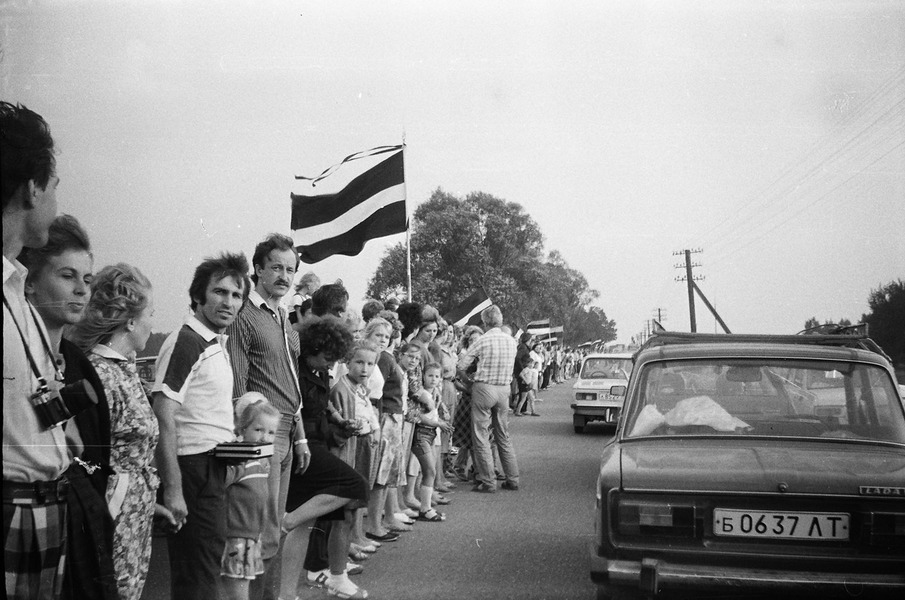
The international workshop »The Long Perestroika from Afar: Making Peripheries Central« explores the ›long perestroika‹ from the 1980s to the 2000s by shifting attention away from the familiar centers of power and toward the peripheries. It is held from June 1 to 3, 2026 at Kloster Seeon, Bavaria and brings together research on local actors, marginalized groups, minorities, and regional initiatives across the socialist and postsocialist world. By focusing on perspectives from outside the main political and cultural centers, the workshop aims to reconsider perestroika as a broader and more uneven historical process whose dynamics continued well beyond the late Soviet period. This is the third and final meeting in the Long Perestroika conference series, following two previous workshops in Prague and Washington, DC.
The project »Perestroika from Below: Participation, Subjectivities, and Emotional Communities across ›the End of History‹, 1980–2000« is supported by the European Research Council (ERC) under the European Union’s Horizon Europe research and innovation programme (grant agreement No 101054550, project acronym PerefromBelow21). Views and opinions expressed are those of the author(s) only and do not necessarily reflect those of the European Union or the European Research Council Executive Agency. Neither the European Union nor the granting authority can be held responsible for them.
The conference is organised by Juliane Fürst (ZZF Potsdam/Central European University Vienna), Bradley Gorski (Georgetown University), Corinna Kuhr-Korolev (ZZF Potsdam), Veronika Pehe (Institute of Contemporary History, Czech Academy of Sciences) and Kelly Smith (Georgetown University).
You can find more information here and in the programme below.
Programme
MONDAY, JUNE 1
15:00 — Welcome
15:30–17:00
OUT OF CENTRE: MEDIA-MAKING IN AND ABOUT PERIPHERIES
Moderation: Kelly Smith (Georgetown University)
Andrii Pykalo (University of Toronto) — Kharkiv Amateur Television and Perestroika (1985–1991): Media Practices and Everyday Experiences of Change
Sandra Plaskonova (Slovak Academy of Sciences) — Revolution from Below: The Birth of Slovakia’s Independent Culture
17:00–17:30 — Coffee Break
17:30–19:00
DISCUSSION PANEL: WAS THERE A PERESTROIKA FOR WOMEN?
Moderation: Dina Fainberg (University of London)
Timothy Nunan (University of Regensburg) — Contested Modernities: Azerbaijani Women’s Magazines and the Geopolitics of Gender and Sexuality, 1985–1997
Ella Rossman (GWZO, Leipzig) — Between Waves: Women’s Organising and Feminist Politics in the Long Perestroika
Liāna Ivete Žilde (Art Academy of Latvia) — Domestic Peripheries: Intimate Family Spaces during Perestroika in the Work of Latvian Photographers Ina Stūre and Inta Ruka
19:30 — Dinner
TUESDAY, JUNE 2
09:30–11:00
PERESTROIKA IN THE VILLAGE
Moderation: Francis Kirk (ZZF Potsdam)
Kateryna Malaia (University of Utah / Kharkiv School of Architecture) — Perebudova (Ukr. for Perestroika) in Rural Homes
Violeta Davoliūtė (Lithuanian Institute of History) — From the Long Thaw to the Long Perestroika: Justinas Marcinkevičius, Algirdas Brazauskas, and the Defense of the Post-Soviet Village
Nathalie Moine (Centre Marc Bloch) — State Farm in Ruins, Disrupted Lives: Perestroika in the Double Periphery of a Moldovan Village
11:00–11:30 — Coffee Break
11:30–13:00
EMPOWERMENT OF THE MARGINALS?
Moderation: Bradley Gorski (Georgetown University)
Maria Cristina Galmarini (William & Mary) — Dissenting Invalids: A Disability History of the Long Perestroika
Jennifer Ramme (University of Graz) — From Image to Action: Women, Queers, and Black & People of Colour Performing Alternatives in Unofficial Music Scenes during Late State Socialism in Poland
Jekatyerina Dunajeva (Corvinus University of Budapest) — Narrating Transformation: Roma Experiences of the Last Socialist Decade and Regime Change
13:00–14:45 — Lunch Break
14:45–16:45
PROFESSIONAL PERESTROIKAS: CONTINUITY AND RUPTURE AT THE WORKPLACE
Moderation: Irina Gordeeva (ZZF Potsdam)
Polina Gundarina (University of Leipzig) — Working with Socialist Fun: Organising Leisure in Soviet Doma kul’tury Before and After 1991
Elene Nabakhteveli (Ilia State University) — Lived Perestroika: Georgian Physicists at the Margin of the Soviet Scientific System
Iuliia Skubytska (ZZF Potsdam) — “Pioneer Organization is Outdated!”: Children Demanding Change Within Perestroika’s Framework
16:45–17:15 — Coffee Break
17:15–18:45
DISCUSSION PANEL: PERESTROIKA OF (FOR) THE SOUL?
Moderation: Juliane Fürst (ZZF Potsdam/CEU Wien)
Choi Chatterjee (California State University) — Vedanta in Late Perestroika and Post-Soviet Russia
Nadezhda Beliakova (University of Bielefeld) — Faith on the Margins: Reassembling Religious Minority Communities during Perestroika in Kazakhstan and the Volga Region
Anca Mândru (Lucian Blaga University of Sibiu) — Etatization of Time vs. Churchification of Space: Secular and Religious Ritual during the Long Perestroika
Alexandra Kolesnik (University of Bielefeld) — Singing Perestroika from the Margins: Vernacular Memorials to Viktor Tsoi and Emotional Communities Beyond the Centres in the 1990s
19:00 — Dinner
WEDNESDAY, JUNE 3
09:00–10:30
NEW COMMUNITIES – OLD VALUES
Moderation: Corinna Kuhr-Korolev (ZZF)
Alexandra Koroleva (Sciences Po Paris) — Akademgorodok in Novosibirsk and the Transformations of Local “Pamyat”: “Hidden” Actors, Commonalities and Conflicts in the 1980s
Marina Aptekman (Tufts University Boston) — “Comrades, Let’s Remember Afghan”: Veteran Unions of the Soviet–Afghan War in Peripheral Industrial Cities in the 1990s
10:30–11:00 — Coffee Break
11:00–12:30
DISCUSSION PANEL: COMMERCIALISATION AND TRANSNATIONALISM
Moderation: Alisa Lozhkina (ZZF Potsdam)
Siobhán Hearne (University of Manchester) — Perestroika and the Reconfiguration of Soviet Humanitarianism: The Soviet Red Cross between Reform and Disaster
Jules Siran (University of Geneva) — Foreign Students in Hungary during the Long Perestroika: Marketization of Student Mobility and Experiences of Exclusion (1980s–1990s)
Alexa von Winning (University of Tübingen) — Seeds of the Market: The Soros Foundation’s Support for Regional Economic Change in Belarus
Steven Harris (University of Mary Washington) — Air Perestroika: Aeroflot’s Breakup and the Rise of Russia’s Regional Airlines
12:30–14:00 — Lunch Break
14:00–15:30
RELIGIOUS PRACTICES ON THE EDGE
Moderation: Veronika Pehe (Czech Academy of Sciences)
Kateryna Budz (University of Edinburgh) — On the Path to Legalisation: The Ukrainian Greek Catholic Church during Perestroika
Abigail Scripka (ZZF Potsdam) — “Men Kommunistka Boldym”: How Long Perestroika Shaped the Lives of Baqsylar in Kazakhstan
15:30–16:00 — Coffee Break
16:00–17:30
DISCUSSION PANEL: PERESTROIKA AS DECOLONISATION?
Moderation: Franziska Davies (ZZF Potsdam)
Faruh Kuziev (Centre for Information Resilience) — Sharora Earthquake: A Soviet Pompeii. Natural Disasters, Decolonisation, and Nationalism in Tajikistan during the Long Perestroika
Asel Doolotkeldieva (University of Potsdam), Elmira Nogoibaeva (Research Center Esimde) — “Sudden” Activism During Perestroika in Kyrgyzstan: Logical Yet Surprising?
Stefanie Eisenhuth (ZZF Potsdam) — Rewriting the City: Competing Memories and the Cultural Politics of Transition in Lviv
Ksenia Robbe (University of Groningen / Goethe University Frankfurt) — The “Peripheral 1990s” and Their Slow Violence in Contemporary Russian Autofiction
Jeff Sahadeo (Carleton University) — Rivers as Terrains of Contest in Georgia’s Perestroika
19:00 — Dinner
Kloster Seeon
Klosterweg 1
83370 Seeon-Seebruck
Contact:
Margarita Pavlova
Leibniz Centre for Contemporary History Potsdam
Am Neuen Markt 1
14467 Potsdam
Email: margarita [dot] pavlova [at] zzf-potsdam [dot] de (margarita[dot]pavlova[at]zzf-potsdam[dot]de)