
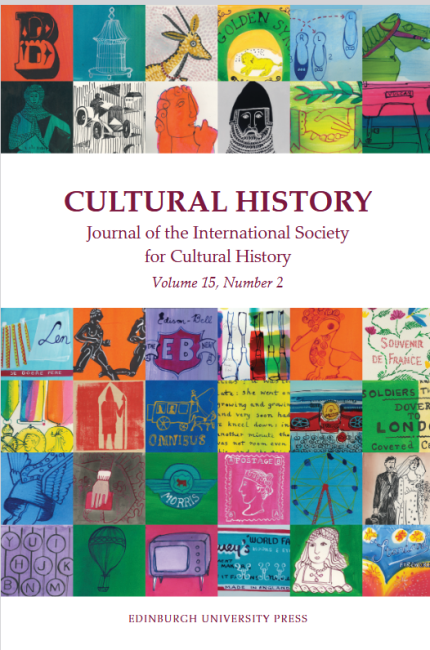
Special Issue zur Geschichte der Hochstapelei in: Cultural History. Journal of the International Society for Cultural History (Volume 15, Number 2, Octoeber 2026)
From political subterfuge and financial fraud to forged academic credentials, impostors, tricksters, and con artists like Anna “Delvey” Sorokin and the “Tinder Swindler” are once again dominating the headlines. Yet, while the guises of impostors evolve — shifting from pseudo-princes to social media manipulators — imposture itself has a long and storied history. By tracing impostors and their representations across borders and continents throughout the long 20th century, this special issue approaches imposture as a distinct media phenomenon. Historically, these deceptive practices gained heightened attention during periods when societies underwent a “crisis of confidence” triggered by rapid socio-cultural change. Consequently, this issue advocates for and implements a transnational approach, tracking traveling actors, concepts, role models, and imaginaries across Europe and the Atlantic.
Articles
Catch Me If You Can... Tracing Impostors in the Long Twentieth Century
Tobias Becker, Michael Homberg, and Thomas Werneke
‘Title Fraud’ in the German Empire: ‘American Dentists’ as Specialists or Impostors,
1870s–1918
Olga Sparschuh
An Anti-Imperialist Impostor: Devendra Nath Bannerjea’s Short Career in the
International Committee on Intellectual Cooperation
Maria Framke
‘Playing Indian’, ‘Becoming Indian’: Comparing ‘Indigenous Identity Fraud’ in
1910/20s and 1970/80s North America and Europe
Martin Deuerlein
The Currency of Trust: On the Social Dimension of Financial Fraud in
the Nineteenth and Twentieth Centuries
Laetitia Lenel
‘Girl, You Know It’s True’? On Milli Vanilli, Frank Farian, and the Question
of Who Actually Cheated Whom
Florian Völker
Der Band geht zurück auf die Tagung Hochstapelei. Zur Kulturgeschichte der Täuschung im 20. Jahrhundert, zu der die drei Herausgeber am 12.-13. Oktober 2026) an das ZZF Potsdam eingeladen hatten.
Mit-Herausgeber Priv.-Doz. Dr. Michael Homberg leitet am Leibniz-Zentrum für Zeithistorische Forschung Potsdam die Abteilung Medien- und Informationsgesellschaft.