Political Transformations of Energy and the Environment

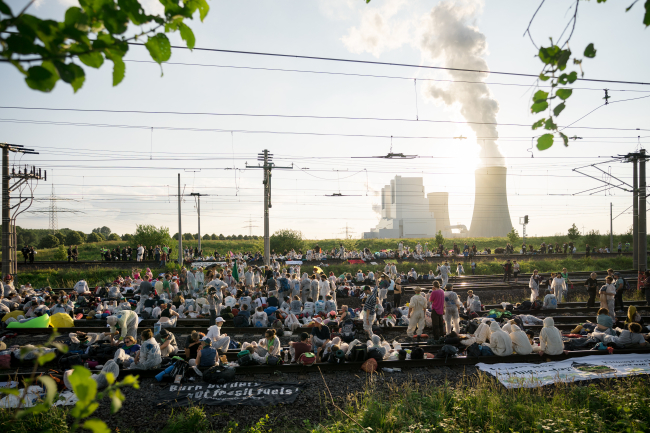
Pipeline near to Sines, in Portugal, Foto: Traroth, Quelle: wikimedia commons, Lizenz: CC BY-SA 3.0

Economic processes always involve the consumption or conversion of energy. Historically, the composition of primary energy sources has changed significantly. Since the emergence of the environmental movement and mounting concerns about global resource limits in the 1970s, the relation between economy and ecology has become a central social and political concern. Recently, its relevance has become even more pronounced due to the effects of climate change. How did national governments and international organizations try to ensure sufficient energy supplies? How did they, as well as non-governmental organizations, try to control and mitigate the negative ecological consequences of energy consumption?

Projekte

Beatrice Azzola

Gasoline Tales: A History of Oil, Power, and Gas Stations in Western Europe

Research project
This subproject reconstructs the history of gas stations in Western Europe since the 1950s, locating them within a broader context of expanding international oil policies that form the backdrop to the everyday life of their users. It focuses on a comparative analysis of West Germany and Italy,

Julian-Dakota Bock

Places of Standstill. Parking, Urban Space and Local Lifeworlds in West Germany and Great Britain, c. 1950-2000

PhD project
The subproject examines the accommodation of parked cars in Western European cities since the breakthrough of mass motorization in the 1950s. In particular, the project asks how mass motorization and the associated space requirements of parked vehicles have shaped local life worlds, everyday practices and spatial conflicts.

Leon Waldmann

Bypass roads in the ‘car country’– motorization and the environment of the Federal Republic of Germany in the Great Acceleration 1950-2000

PhD project 
The project examines how automobile-based – and thus energy-intensive – lifestyles spread in the Federal Republic of Germany between 1950 and 2000 and, at the same time, came under criticism in the wake of debates on environmental pollution and climate change.

Rüdiger Graf, Christopher Neumaier

Auto(im)mobile Infrastructures in West Germany and Western Europe in the Great Acceleration

Joint project
with three subprojects at the ZZF
Project Leaders: Rüdiger Graf und Christopher Neumaier
Funded by the Leibniz Association, funding line “Cooperative Excellence” (2026)

In light of current debates on climate change and the transformation of mobility patterns “Mobilitätswende”, this project re-evaluates the history of automobile infrastructure in West Germany and Western Europe since the mid-twentieth century.

Mario Bianchini

The Production and Dissemination of Energy Knowledge in the Federal Republic of Germany and the German Democratic Republic from 1949 to 1989/90

Research project

The German-German comparison demarcates the political elements of energy knowledge by comparing how this field was created and disseminated in both a planned economy system with a state-controlled public sphere and a liberal economic order.

Jan-Henrik Meyer

Nuclear energy, international organisations and the law

Associated reseach project
Based on the history of the international, European and national legal regulation of nuclear power, the project deals with central questions of historical research: the role of international organisations and their experts; politics, law and regulation; environmental protection and energy use; and the handling of technologies and their risks.

Laura Kaiser

Economic Expertise and Environmental Regulation in West Germany since the 1970s

PhD project
The project examines the growing importance of economic regulation in West German environmental policy in the last third of the 20th century. In particular, it focuses on the proliferation of economic expertise in advisory boards such as the Council of Experts on Environmental Issues.
The project is part of the Joint Project "Expecting Limits and Limiting Expectations – Economic Expertise, Environmental Policy and Consumption, 1970-2000".