(Abstract, German Version below)
Carbon Transnationalism: Conflict and Cooperation Around Coal in Interwar Europe
This project explores a set of historical processes that I conceptualize as “carbon transnationalism”. This notion serves to highlight that fossil fuels have, from the mid-19th to today, been extracted, processed and burnt in transnational exploitative systems, involving complex cross-border relations, and that fossil fuels, in the process, fundamentally changed the political, economic, social and cultural relations between and within countries. The empirical focus in this particular study is on coal. Taking the traumatic coal shortages in Europe during World War I as a point of departure, the project zooms in on the Interwar era. This period marks the peak of coal’s dominance in the European energy system and it became the most vivid one in terms of European coal transnationalism.
A diverse set of actors engaged in Interwar European coal transnationalism against the backdrop of war-time memories, radical economic ups and downs, rapid technological change, geopolitical instability, the rise of authoritarian regimes, protectionism, dreams of autarky and visionary pan-Europeanism. The main focus is on the interaction between key coal-producing regions such as Britain, the Ruhr, Silesia and Donbass and three broadly defined European regions that were strongly dependent on coal imports: Northern Europe, Central Europe and Southern Europe. The wider argument is that coal transnationalism during the Interwar era forms a stepping stone – and sets the tone – for later conflicts and dilemmas around oil and gas in and beyond Europe.
The project thus indirectly seeks to enrich scholarly analyses of key developments in more recent historical periods such as the oil crises of the 1970s and the conflicts around Russian natural gas in the 21st century.
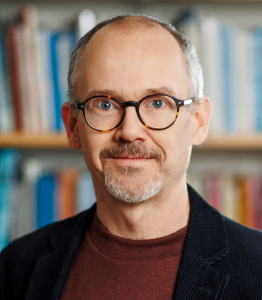
Prof. Dr. Per Högselius works in Stockholm for the History of Science, Technology and Environment at the KTH Royal Institute of Technology. At the ZZF Potsdam he is continuing his research on his project and is a Visiting Fellow in Department II: Knowledge – Economy – Politics.
German Version
Kohlenstoff-Transnationalismus: Konflikt und Zusammenarbeit rund um die Kohle im Europa der Zwischenkriegszeit
Dieses Projekt untersucht eine Reihe historischer Prozesse, die ich als „Kohlenstoff-Transnationalismus“ konzeptualisiere. Dieser Begriff soll verdeutlichen, dass fossile Brennstoffe von der Mitte des 19. Jahrhunderts bis heute in transnationalen Ausbeutungssystemen gefördert, verarbeitet und verbrannt wurden, wobei komplexe grenzüberschreitende Beziehungen eine Rolle spielten, und dass fossile Brennstoffe in diesem Prozess die politischen, wirtschaftlichen, sozialen und kulturellen Beziehungen zwischen und innerhalb von Ländern grundlegend verändert haben.
Der empirische Schwerpunkt der Studie liegt auf Kohle. Ausgehend von den dramatischen Kohleengpässen in Europa während des Ersten Weltkriegs konzentriert sich das Projekt auf die Zwischenkriegszeit. Diese Periode markiert den Höhepunkt der Dominanz der Kohle im europäischen Energiesystem und war die prägendste Phase im Hinblick auf den transnationalen Kohlehandel in Europa. Eine vielfältige Gruppe von Akteuren war am transnationalen Kohlehandel im Europa der Zwischenkriegszeit beteiligt – vor dem Hintergrund von Kriegserinnerungen, radikalen wirtschaftlichen Schwankungen, raschem technologischen Wandel, geopolitischer Instabilität, dem Aufstieg autoritärer Regime, Protektionismus, Träumen von Autarkie und visionärem Pan-Europäismus.
Im Mittelpunkt steht dabei die Wechselwirkung zwischen wichtigen Kohleförderregionen wie Großbritannien, dem Ruhrgebiet, Schlesien und dem Donbass sowie drei weit gefassten europäischen Regionen, die stark von Kohleimporten abhängig waren: Nordeuropa, Mitteleuropa und Südeuropa. Die übergeordnete These lautet, dass der transnationale Kohlehandel in der Zwischenkriegszeit ein Sprungbrett für spätere Konflikte und Dilemmata rund um Öl und Gas in und außerhalb Europas bildete – und den Ton dafür angab. Das Projekt zielt somit indirekt darauf ab, die wissenschaftlichen Analysen zu zentralen Entwicklungen in jüngeren historischen Epochen – wie beispielsweise den Ölkrisen der 1970er Jahre und den Konflikten um russisches Erdgas im 21. Jahrhundert – zu bereichern.
Prof. Dr. Per Högselius arbeitet in Stockholm am History of Science, Technology and Environment des KTH Royal Institute of Technology. Am ZZF Potsdam forscht er als Visiting Fellow an seinem Projekt weiter und ist Gast in Abteilung II: Wissen – Wirtschaft – Politik.