
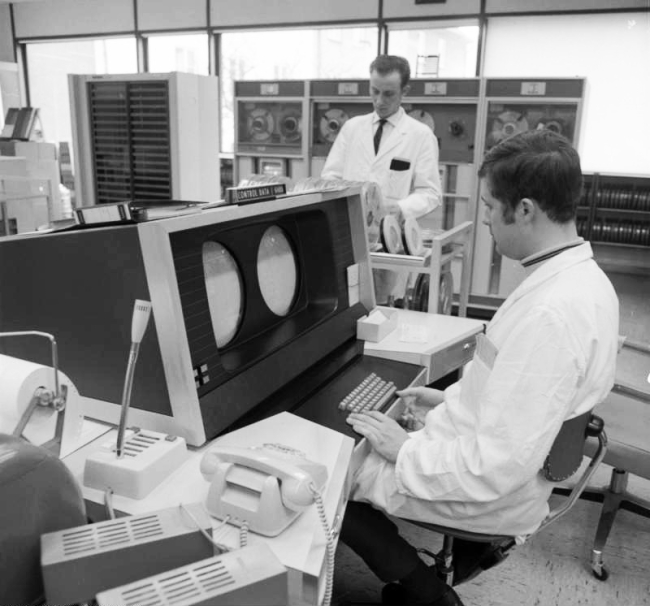
Research project Part of the Leibniz-Verbundvorhaben „Digital Inequalities“ The project analyses how new computer experts in West Germany challenged established corporate hierarchies, procedures and work processes and thus constituted themselves as a new class between the 1970s and 1990s.
PhD project Part of the Leibniz-Verbundvorhaben „Digital Inequalities“ The project explores the introduction of computers and databases in government agencies in West Germany and Western Europe from the late 1960s to the early 21st century.
Joint project of the ZZF Potsdam in cooperation with the GEI and the HS Bund Project management: Michael Homberg Funded by the Leibniz Association, funding line “Cooperative Excellence” (2023) The project focuses on the previously little-discussed downsides of digitalization. It explores how the sometimes hidden biases of technological systems affect the world of work, gender relations, the education system, and migration regimes.
PhD project Part of the Leibniz-Verbundvorhaben „Digital Inequalities“ The project examines the influence of digital change on gender-related inequalities in East and West Germany since the 1970s.
Research project (Postdoc) Supported by Alexander von Humboldt-Stiftung, Feodor-Lynen-Rückkehrstipendium Way before the era of online-dating- apps, marriage bureaux and dating institutes in the US and Europe began to use computers to conquer the rapidly growing markets of the ‘lonely hearts’. The project explores the long and chequered history of electronic matchmaking since the 1950s.
This project addresses leadership systems underpinned with computers in the Bundeswehr and the National People’s Army (NVA) in the context of the formation and establishment of both armies within the alliance system of NATO and of the Warsaw Pact.